


For the past 47 years, Antony has conserved and disseminated the work of his parents, Lee Miller and Roland Penrose. With his daughter Ami he is the co-director of The Lee Miller Archives and The Penrose Collection at Farley Farm House in Sussex and has seen his parents’ work featured in major exhibitions at the V&A, National Portrait Gallery, the Imperial War Museum London, Manchester Art Gallery, Scottish National Gallery of Modern Art and the Whitworth.
He has lectured at museums and universities around the world and made documentaries for television. Publications include The Lives of Lee Miller, Lee Miller’s War (editor), The Angel and the Fiend, The Home of the Surrealists, Roland Penrose the Friendly Surrealist and The Boy Who Bit Picasso.
The movie titled LEE starring Kate Winslet is based on his book The Lives of Lee Miller and for ten years he has been heavily involved with its production and release.
For bookings, please use the contact form below stating the title(s) of the lectures you are interested in.
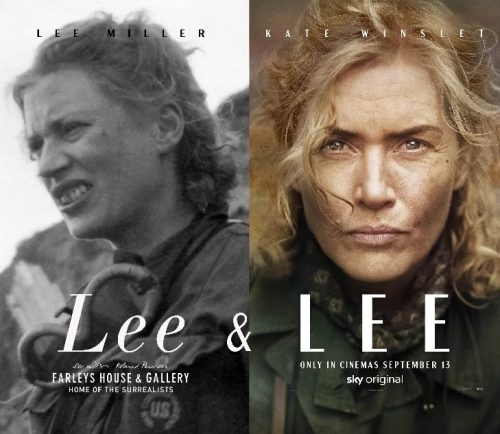
Lee and LEE: The Making of the movie ‘LEE’
55 Minutes, 300 images, PowerPoint
The behind-the-scenes story of the decade long journey to the release of the major feature film ‘LEE’, starring Kate Winslet. The movie is based on Antony’s biography of his mother, The Lives of Lee Miller published in 1985. LEE is the fifth iteration of a movie, begun by Troy Lum, of the Australian company Hopscotch. Kate Winslet became the producer, shaping the movie as a result of the weeks she spent immersed in the Lee Miller Archives. She appointed the director, Ellen Kuras, screen writers Marion Hume and Liz Hannah and producer Kate Solomon, all of whom are women. LEE owes its integrity and authenticity to being a film about a woman made by women. Antony Penrose was closely involved with the production as Factual Consultant working closely with the team for ten years, researching to verify moments in history for the screenplay. This presentation includes production stills by Kimberly French and before and after images of amazing the special effects created by JFX.

Roland Penrose, Lee Miller and Henry Moore
55 minutes, 300 images, PowerPoint
Among the surrealists, many so called friendships were battle grounds of rivalry, but some were an unshakeable synergistic loyalty. With Henry Moore and my parents, Roland Penrose and Lee Miller, it was the latter. Roland and Henry came from backgrounds that were a world apart by they were united in their commitment to exploring new ideas and pushing the frontiers of modern art. This is the story, documented using many photographs by Lee Miller, of the friendship and collaboration of two artists who met during the early days of surrealism in Britain while the world was being threatened by the dark forces of fascism. Both veterans of the First World War, they distinguished themselves in the next and went on to blaze a trail that changed the medium of sculpture forever. At the beginning Henry’s work was often reviled and in 1937 Roland provoked the wrath of his Hamstead neighbours when he positioned Henry’s mystic Mother and Child in front of his house. Twenty years later a seismic cultural shift had occurred and in 1958 both men worked together to realise the installation of Henry’s reclining figure (pictured) in front of the UNESCO headquarters at the World Heritage Centre in Paris.

The Road is Wider Than Long
50 minutes, 250 images, PowerPoint and Zoom
The Road Is Wider Than Long is a love poem created as a photo-book by a surrealist artist, my father Roland Penrose. He wrote it for the new passionate love of his life, the American photographer Lee Miller, who became my mother. It recounts a journey they made together through the Balkans in 1938, visiting notable locations in Greece and isolated rural communities in Romania. He and Lee photographed a way of life that had endured unchanged for centuries. In the book the images by Penrose merge seamlessly with his words, subtly and lovingly expressing his feelings for Lee and questioning if something so good can endure. It was a metaphor for the peasant life around them that was about to be brutally swept away by the Nazi occupation in the Second World War. This unique example of a photo-book by a British surrealist was published in 1939. Roland travelled to Cairo to give Lee the first copy, thus persuading her to leave her Egyptian husband and join him in London.
My presentation draws heavily on Lee and Roland’s photographs and the many letters they exchanged. It gives a unique insight into their lives and rural life in Greece and Romania.

The Indestructible Lee Miller
50 minutes, 250 images, PowerPoint and Zoom
From an early age Lee Miller learned the chances life brought needed her skilful and courageous adaptation to make them work for her. Born 1907 in America, she morphed from a young artist to a top fashion model. In Paris she became a surrealist photographer also shooting fashion for American Vogue. Back in New York she had a highly successful studio but left to marry an Egyptian and become a photographer of that land. At the outbreak of WW2 she arrived in London, returning to fashion photography for Vogue and later became their war correspondent with the US Army in Europe. Her final career was as a surrealist gourmet cook in her last home, Farleys House in Sussex. Her life was filled with passion, heartbreak and high drama. Her secret in moving forward was to grab her chances with both hands. It made her indestructible in the sense that today her work is the subject of many books, TV documentaries, international exhibitions and now a major movie titled LEE, starring Kate Winslet as Lee Miller.
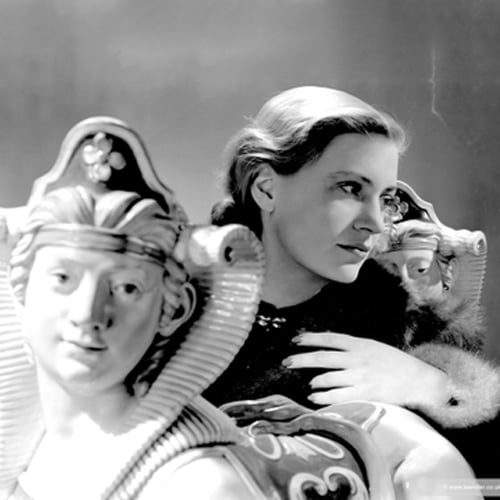
Surrealist Lee Miller
60 minutes, 300 images, PowerPoint
Lee Miller was a surrealist back home in Poughkeepsie New York before the movement had a name. Her love affair and collaboration with Man Ray in Paris from 1929 to 32 established her unquestionably as part of the movement and her love and later marriage to Roland Penrose put her firmly in the middle of British surrealism. She remained a surrealist resolutely on her own terms through her subsequent roles as a fashion photographer, photo-journalist, combat photographer and finally a gourmet cook. She is now rightfully recognised as a woman surrealist artist for whom surrealism was a natural expression of her way of life and her way of seeing. who made her own highly significant contribution to the art of the 20th Century in Britain and Europe.

Lee Miller: Witnessing Women at War
60 minutes, 300 images, PowerPoint
(45 minute Zoom version also available)
For Lee Miller a woman at war was any woman caught up in World War 2. She shot faultless images for Vogue’s haute couture in London’s bombed out streets. She documented the magnificent work of the WRNS, ATS, the Land Girls, the WRVS and the nurses. She shows us the refugees in Europe, girls accused of collaboration and women forced into slave labour or prostitution and concentration camp victims. Their roles range from bravery to stupidity and from enforced involvement to volunteering. It is told against the background of Lee Miller’s own life story which takes her from being a fashion supermodel via life as a surrealist artist to a combat photographer and finally a gourmet cook.

Lee Miller and Roland Penrose
60 minutes, 270 images, PowerPoint
The story of Roland Penrose, British Surrealist artist and biographer of Picasso and Lee Miller, the American Surrealist photographer, who shot fashion and combat with equal talent seen through the eyes of their son Antony Penrose, who is also their biographer. We look at how their early lives formed their motivations and how they strove to use art to make the world a better place. The last decades of their life together were at Farley Farm, their home in Sussex which was frequented by many prominent Surrealist and Modern artists. Both Miller and Penrose feature in the movie LEE, based on Antony’s biography The Lives of Lee Miller and starring Kate Winslet as Lee Miller and Alexander Skarsgard as Roland Penrose.

The Legendary Lee Miller
60-80 minutes, 300 images, PowerPoint
The life of Lee Miller, told with reference to those with whom she exchanged creative inspiration – Man Ray, Roland Penrose, Pablo Picasso, David E. Scherman, her father Theodore Miller and her son Antony Penrose. A definitive view by her son and biographer, this presentation has been acclaimed for its ability to embrace many different levels of the history of art and photography, social commentary and emotional connection with the subject. It gives an accurate and lasting portrait of a talented and courageous woman who was a free spirit and a trail blazer.

Roland Penrose: The Friendly Surrealist
60 Minutes, 320 images, PowerPoint
50 Minutes, 250 images, Zoom
The man who came from a family of strict Quakers became a key figure in Modern Art in the 20th Century, responsible for bringing Surrealism to Britain in 1936 and Picasso to Britain in 1960. He was a Surrealist artist in Paris, a friend of Breton and Éluard and later the close friend and biographer of Max Ernst, Picasso, Miró, Man Ray and Tàpies. He founded the ICA in London and curated exhibitions of work by Picasso (1960) and Miró (1964) at the Tate Gallery. His own work is enjoying a return to prominence following a major retrospective exhibition of his work at the Scottish National Gallery of Modern Art, Edinburgh in 2001 and at Fundacion Picasso Malaga in 2008 and Southampton Art Gallery in 2012. In 1937 he met the American photographer Lee Miller who he married in 1947. This presentation is illustrated with many of her images.

Hand Grenades Like Cartier Clips
60 minutes, 280 images, PowerPoint and Zoom
Two genres shaped the life of Lee Miller, Surrealism and the world of fashion. They informed each other and were both central to the way she saw the world. Her career as a fashion model began with an accidental encounter with Conde Nast, the proprietor of Vogue who put her on his front cover a few weeks before her 20th birthday. She became the model for Lepape, Steichen, Genthe, Man Ray, Hoyningen Heune, Horst, Picasso and Penrose – later to be her husband. She emerged as a fashion photographer in her own right, metamorphosing into a war correspondent and finally a combat photographer before returning to her role as a distinctive and witty photographer for Vogue in the post war years. This presentation shows how Lee Miller’s success on both sides of the camera has left us with enduring images that result from her unique way of seeing.

Lee Miller’s Egypt
60 minutes, 280 images, PowerPoint
In 1934 Lee Miller, the American Surrealist photographer closed her successful studio in New York, married Aziz Eloui Bey, an Egyptian businessman and settled in Cairo. The easy life of a rich ex-patriot was not for her and she made long range excursions into the desert, photographing the wonders of what seemed to her an eternally Surrealist land. On a visit to Paris in 1937 she met Roland Penrose, a British Surrealist. She later wrote him eloquent letters from Egypt and eventually after travelling with him in the Balkans and Egypt she left Eloui and went to live with him in London just as the war broke out.
This production is based on recent field research work done in Egypt in January 2009 by Antony Penrose with Mark Haworth-Booth the curator of the exhibition The Art of Lee Miller and Joshua Penrose. It draws heavily on Lee Miller’s own photographs and her letters to Roland Penrose. Penrose’s own work inspired by both Lee Miller and by Egypt is also included to complete the narrative of what was one of the most exciting and productive periods in Lee Miller’s life.

Lee Miller’s Indelible Images
55 minutes. 290 images, PowerPoint
What is it that makes an image stick in our memory against our will? People find many of Lee Miller’s combat photographs have this indelible quality, and of these the most powerful are from her witness of the holocaust. Her stark and harrowing evidence takes us back to one of the most terrible episodes of persecution in the whole grim history of man’s inhumanity to man. In this lecture Miller’s son Antony Penrose talks about why his mother responded to the holocaust in the way she did, and the work he has done to authenticate her evidence as a witness – evidence she deliberately left for us in the hope it would help prevent history repeating. When we learn the background, we begin to understand why so many of her images are so poignant, and why they have the ability to engrave themselves in our minds.

Roland Penrose and the British Surrealists
60 minutes, 290 images, PowerPoint
In 1922 Roland Penrose went to Paris and became a Surrealist artist. In 1936, following the collapse of his marriage to the poet Valentine Penrose (neé Boué) he returned to London, introducing Surrealism to an incredulous and often hostile British public. With Herbert Read and David Gascoyne he mounted the 1936 International Surrealist Exhibition, and the movement took root in this country. Eileen Agar, John Banting, Paul Nash, Henry Moore, Humphrey Jennings, Conroy Maddox and later Desmond Morris became numbered among Roland’s friends. Reviled and ridiculed at the time, and beset with internal quarrels, the movement made a truly lasting impact on the arts in Britain.

Lee Miller’s War
60 minutes, 230 images, PowerPoint
90 minute performance version is also available in which Ami Bouhassane, Lee Miller’s granddaughter, is the voice of Lee Miller, reading from her original manuscripts and letters.
Lee Miller is thought to be the only woman combat photographer with the allied infantry in Europe during WW II. This lecture presents her war photojournalism from shortly after D Day in Normandy to the flames leaping from Hitler’s Berghof near Berchtesgaden that signalled the end of the war, and the post war traumas of Austria and Hungary. The story is told through extensive use of Lee Miller’s own words set to her photographs.

Lee Miller in Bavaria
(Sequel to Lee Miller’s War)
20 minutes, 80 images, PowerPoint
At the time of the celebrations of 60th anniversary of V.E. day, Antony Penrose went to the locations photographed by Lee Miller, and re-photographed the same scenes as they are now. The result is a poignant documentary of the healing process of time and of the German nation’s process of coming to terms with its own history.
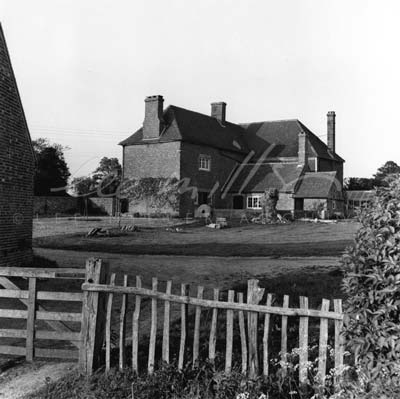
Farley Farm House
55 minutes, 255 images, PowerPoint
Farley Farm House was the home of Lee Miller and Roland Penrose from 1949 until Roland’s death in 1984. It is now a private museum housing a large collection of modern art and photography, including works by Picasso, Max Ernst, Joan Miró, Man Ray and many others who were personal friends. The house itself is an artwork and in appearance is as close to its original form as possible. This presentation is the story of the house right up to the present day where it is the focus for the many books, films and exhibitions that emanate from the archives and collections.

The Road to Sitges: Lee Miller, Roland Penrose and Picasso
50 minutes, 340 images, PowerPoint
This is about a journey that began in pre war Paris and ended in effect in Sitges, near Barcelona with Catalonia as the lens that focuses the activity. It tells of the intimate friendship of Lee Miller, Roland Penrose and Picasso, and their involvement in the Spanish Civil War, WW2 as well as the rich cultural collaboration they created and underscores that art was for them a way of life filled with political and moral significance. It is about a group of people who shared love, passion and loyalties that never died.
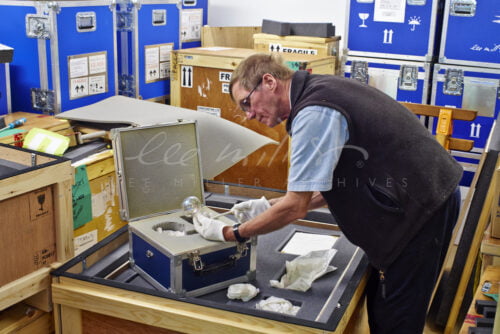
Back-stage at the Lee Miller Archives
50 minutes, 250 images, PowerPoint
A behind the scenes look at the creation of the Lee Miller Archive which houses more than 60,000 negatives of Lee Miller’s work, 10,000 vintage prints plus manuscripts and ephemera. We see how Lee Miller’s family conserve and disseminate her work and that of Roland Penrose and their collection and their home Farley Farm House which has become a museum from which the archive produces a constant stream of books, films and exhibitions.We see major exhibitions being created, conservation and curatorial work in progress and the administration and financing of the archive which is privately run and supports itself though revenue received from its activities supplying fine prints and intellectual property rights. This story is an attestation to the 35 years of close collaboration we have had with The Scottish National Gallery of Modern Art, whose expertise and friendly support has been invaluable to us. It is also the human and practical face of running what has become one of the most internationally significant private collections of photography and fine art.

Dylan Thomas, Lee Miller and Roland Penrose
20 minutes, 77 images, PowerPoint
From the moment Surrealism arrived in Britain in the form of Roland Penrose’s 1936 International Surrealist Exhibition, Dylan Thomas was frequently to be found at exhibitions and at gatherings of the artists. He became friends with many of them, and although he disavowed intellectual connections with the movement it is arguable that his Under Milk Wood (1953) has influences of surrealism and Picasso’s war time poem Desire Caught By The Tail. Both Lee Miller and Roland Penrose were at times close to Dylan Thomas, and Lee photographed him for Vogue Magazine in 1946. This short lecture works well as an adjunct to one of the 60 minute presentations.

The Angel and the Fiend
A drama for five voices set to a constant stream of images.
Written and devised by Antony Penrose
Running time: 2 hours including a 20 minute interval
Under Lee Miller’s brave and beautiful exterior there lay a hidden torment which she expressed in these words;
‘I was terribly, terribly pretty. I looked like an angel but I was a fiend inside’
Lee Miller
The life and work of Lee Miller, Fashion Model, Surrealist Photographer, Combat Photographer and Gourmet Cook is brought to life in this drama for five voices and picture. The words of Lee Miller, Man Ray, Roland Penrose, David Scherman and Antony Penrose are set to a constant stream of images drawn from Lee Miller’s career in photography. Written by her son and biographer Antony Penrose, the play was originally produced specially for the J.P. Getty Museum in Los Angeles at the time of their major exhibition of Lee Miller’s work titled The Surrealist Muse, where its rendition by The Chance Theatre won an award.
This award winning drama has been performed widely internationally. In this version Antony Penrose appears as himself, Lee Miller is played by her granddaughter Ami Bouhassane and the role of the Surrealist photographer Man Ray by James Leighton. Miller’s wartime buddy David E. Scherman is played by Jonathan Bailey and her husband Roland Penrose by David Burrough, who also directs the production.
…one of the most powerful pieces of theatre I have seen in a very long time, a remarkable trip down memory lane, enhanced by voices and pictures from the past. Absolutely incredible… a tight, emotional and powerful piece, a beautiful collage of photos and memories.
Chris Hislop. Brighton Fringe Review, 7th May 2009

A Portrait of Space: The life and loves of Roland Penrose (1900-1984)
A drama for six voices set to images.
Written and devised by Antony Penrose.
Roland Penrose was the grandson of Alexander and Eliza (neé Sharples) Peckover who lived in Peckover House, Wisbech, now a National Trust property. His mother was their daughter Elizabeth Josephine Peckover and his father was a portrait painter from near Dublin, James Doyle Penrose. The Penrose family lived at Oxhey Grange in Watford, and were very strict Quakers, an influence that had a strong and positive effect on Roland Penrose’s entire life.
A Portrait of Space tells the story of the life of Roland Penrose using words that were for the most part written or spoken by him and the other protagonists. The writings of letters and manuscripts are edited together to form a witty and emotional narrative of Roland Penrose’s love of the three key women in his life; Valentine Boué, Lee Miller and Diane de Riaz, his passion for the way of life of the Surrealists and his great achievements as a Surrealist artist and later as a curator and biographer. The period begins in the hedonistic Surrealist heyday of the 1920’s and 30’s. We learn of Roland Penrose and Lee Miller’s disparate involvement in World War 2 – he was a camouflage specialist and she became a combat photographer – of how Valentine survived and went to fight with the Free French and of how Roland rose to prominence in the post war years as the ‘Picasso man’, the artist’s leading biographer and curator of his work. Finally after the death of Lee and Valentine he lives on at his Sussex home Farley Farm, travelling with his girlfriend Diane de Riaz, still making his famous collages, still selling and still exhibiting.
A Portrait of Space is the sequel to Antony Penrose’s highly acclaimed and award-winning work on his mother, The Angel and The Fiend, first performed at the JP Getty Museum Los Angeles in 2003. It runs 1 hour and 50 minutes including a 20 minute interval. The format is dialogue spoken by actors which is set to a constant stream of images that include Roland Penrose’s works of art and Lee Miller’s photography.
Personal Statement by the author:
We are nearly all are destined to discover our parents and following the trail of my father Roland Penrose has been a piecing together of archaeological finds to uncover the story behind the events. He was widely known as the friend and biographer of Picasso. He was the curator of the Picasso retrospective in 1960, the Tate’s first real blockbuster show which he followed with his Joan Miró show in 1964 and his Man Ray show at the ICA in 1975. He was less well known as a Surrealist artist and poet because although his work merits far greater attention, he was too modest to promote himself. His inner drives, his many quiet passions and the complexities of his many faceted personality are even less known. A Portrait of Space is the intimate back story of Roland Penrose. I have portrayed his life, his loves and his conviction to the values of truth, freedom and justice that drove him. Where possible I have used his own words and images and many of those of my mother, the surrealist photographer Lee Miller. It is nearly eighty years since they met, and I hope this is a fitting tribute to their Surrealist romance as well as a glimpse into the warm hearted, wise and witty man who was my father.
Antony Penrose 2016
For bookings, please contact us here stating the title you are interested in, the institution / club or association name and approx. dates.